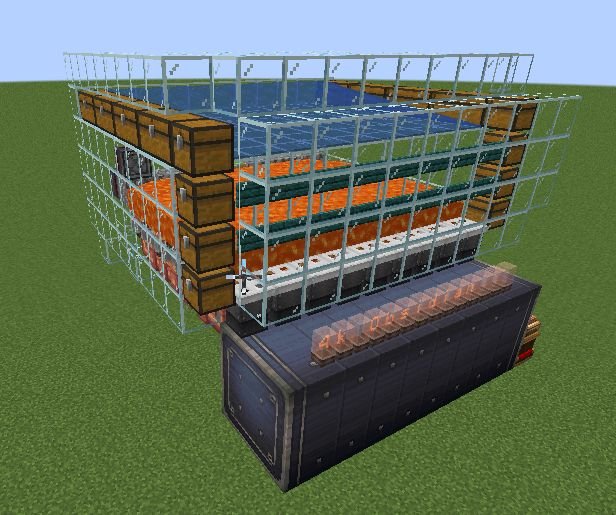
Ever found yourself in Minecraft, staring down a massive build or a portal-heavy adventure, and realizing you need an intimidating amount of obsidian? Crafting a Nether portal, an Ender chest, or a beacon demands this notoriously hard-to-mine block. But instead of endlessly strip-mining in the Nether or painstakingly creating individual blocks, imagine generating it on demand. Mastering simple manual and semi-automatic obsidian generator designs is a game-changer for any serious crafter or builder.
These aren't just theoretical concepts; they're practical, reusable setups that empower you to produce obsidian with efficiency, transforming it from a rare commodity into an abundant resource. Let's dig into how you can build these essential structures and why they're worth your time.
At a Glance: Your Obsidian Generation Essentials
- Obsidian Foundation: Obsidian forms when flowing water meets a lava source block. This is the core principle for all generators.
- Manual Generators: Simple, low-resource designs for occasional obsidian needs. Requires direct player action for each block.
- Semi-Automatic Farms: Scale up production significantly, generating up to 3,000 obsidian per hour. Involve a system for lava generation or transport, reducing repeated player input.
- Key Materials: Fireproof blocks (cobblestone, stone), buckets of water, buckets of lava (or a lava source).
- Safety First: Always build with fireproof blocks and plan for lava containment to avoid unwanted fires or destruction.
- Efficiency: Even basic semi-automatic designs vastly outperform manual collection in the wild.
The Foundation: Understanding Obsidian Generation in Minecraft
Before we jump into construction, let's briefly recap the fundamental principle that makes all obsidian generators possible: the interaction of water and lava. In Minecraft, when a flowing water block makes contact with a lava source block, that lava source block instantly converts into obsidian. If the water flows over flowing lava, it turns into cobblestone or stone, which isn't what we want for obsidian. This distinction is crucial for successful generator design. We need to expose lava source blocks to flowing water.
This magical interaction allows for repeatable generation, provided you can consistently supply both water and lava. Water is usually easy to manage with an infinite water source. Lava, however, is the trickier component, especially when scaling up to semi-automatic systems.
Building Your First Manual Obsidian Generator
A manual obsidian generator is your entry point. It's fantastic for when you need a dozen blocks for a portal or a few Ender chests and don't want to invest heavily in a complex redstone setup. It's reusable, reliable, and teaches you the core mechanics.
Essential Materials for a Manual Generator
For a basic setup, you'll need surprisingly little:
- 1 Bucket of Water: This creates your water source. You'll only need one bucket if you build an infinite water source first, but for the generator itself, one bucket to place the source is enough.
- 1 or More Buckets of Lava: Each bucket of lava you place will become one obsidian block. So, if you want 6 obsidian, you'll need 6 buckets of lava.
- Approximately 50 Fireproof Blocks: Think cobblestone, stone, bricks, or netherrack. These will form the structure of your generator and safely contain the lava and water.
Step-by-Step Construction: The Basic Reusable Design
This design prioritizes simplicity and safety. You'll want a relatively flat piece of land for ease of construction.
- Prepare the Water Holder:
- Start by building a simple U-shaped or rectangular enclosure out of your fireproof blocks. This will be your "water holder."
- It should be 1 block high and can be any size you like (e.g., 1x3, 1x5). This is where your water source will sit.
- Example: For a 1x3 water holder, you'd place 5 blocks in a "U" shape, leaving a 1x3 space open on top.
- Construct the Lava Holder (The Key to Obsidian):
- Immediately adjacent to your water holder, separated by a single row of solid blocks, build another enclosure. This is for the lava.
- The lava holder must be 1 block lower than the base of your water holder. This creates a "step" for the water to flow down.
- This holder needs to be 2 blocks deep. The bottom layer will contain the lava source blocks, and the top layer (which is at the same level as the water holder's base) is where the water will flow over.
- Crucial Step: On the side of the lava holder that faces the water holder, create a path for the water. This usually means digging out the separating row of blocks at the lava holder's top level so water can spill directly over the lava sources.
- Example: If your water holder has its base at Y=64, the top of your lava holder structure will also be at Y=64, but the floor where the lava sources sit will be at Y=62. The step will be a 1-block gap at Y=63 between the water and lava areas.
- For instance, to make 6 obsidian, create a 2x3 block space for your lava sources on the lower level (Y=62 in our example). This means a 2-block wide, 3-block long pit, 2 blocks deep from the surface level.
- Place Water and Lava:
- Place your bucket of water into the water holder. It should form a still water source.
- Now, carefully place one bucket of lava into each of the 2x3 block spaces you prepared in the lower level of your lava holder. These will be your lava source blocks.
- Generate Obsidian:
- Destroy the one block (or series of blocks) that separates the water source from the "step" on the lava holder's side.
- The water will flow over the lava source blocks. Watch them transform! Each lava source block that flowing water touches will become an obsidian block.
- Voilà! You've just made obsidian.
Using Your Manual Generator
After the obsidian forms, mine it with a diamond or netherite pickaxe (or better, if you have it!). Once mined, simply replace the separating block, place new lava source blocks, and repeat the process. This method, while simple, is a reliable way to get obsidian on demand without needing to search for it in caves or the Nether.
For more visual guidance on getting started, you might find it helpful to look into how to build an obsidian generator with detailed diagrams and step-by-step imagery.
Scaling Up: Introducing Semi-Automatic Obsidian Generator Designs
Manual generators are great for small batches, but what if you need hundreds, or even thousands, of obsidian blocks? That's where semi-automatic designs shine. These designs incorporate a system for generating or transporting lava more efficiently, reducing the manual labor involved in placing individual lava buckets. They still require player intervention to mine the obsidian, hence "semi-automatic."
The core principle remains the same: flowing water meets lava source blocks. The automation comes in how those lava source blocks are presented.
The Power of Semi-Automatic Farms
Both the simple and 1-wide tileable semi-automatic farms can produce an impressive 3,000 obsidian per hour, which translates to about 50 blocks per minute. This level of production significantly accelerates any large-scale project you might have.
Design 1: The 1-Wide Tileable Semi-Automatic Farm
This design is popular for its compact footprint and the ability to "tile" it – meaning you can copy-paste the design side-by-side to increase output proportionally. It's a bit more involved than the manual method, often requiring Redstone for lava generation or movement.
How it Works (Conceptual Overview):
- Lava Generation/Supply: This is the "automatic" part. Instead of manually placing lava buckets, these farms typically rely on a Dripstone farm to generate lava or a system to dispense lava from a central source.
- Obsidian Formation Chamber: A compact area where water is periodically released to flow over the lava source blocks.
- Mining Access: Designed so the player can stand in a specific spot and mine multiple obsidian blocks as they form, often without moving.
Key Components (Typical):
- Cauldrons and Dripstone: For infinite lava generation, if you're not sourcing lava directly from the Nether. Dripstone blocks placed above cauldrons will slowly fill them with lava.
- Dispensers: To release water (and sometimes lava, if not using dripstone).
- Pistons: To push/pull blocks, often used to expose lava sources or clear obsidian.
- Redstone Circuitry: To time the dispensers, pistons, and other mechanisms.
- Hopper Minecarts (Optional): Some designs use these to collect lava or transport items, though simpler versions omit them.
Building Philosophy:
The goal is to create a cycle:
- Lava source block is presented.
- Water is released, flowing over the lava, turning it to obsidian.
- Water is retracted.
- Player mines the obsidian.
- New lava source block is presented, and the cycle repeats.
The "1-wide tileable" aspect means the entire mechanism (lava generation, water release, obsidian formation) fits into a single block width, allowing you to string many of these units together for massive production.
Design 2: A Simpler, Slightly Larger Semi-Automatic Version (Without Hopper Minecarts)
If the 1-wide tileable design with all its Redstone and hopper minecarts feels a bit much, there's often a slightly larger, simpler variant. This version focuses on reducing complexity while still boosting obsidian output significantly over manual methods.
Distinguishing Features:
- No Hopper Minecarts: Simplifies construction and reduces resource cost. Lava might be manually placed initially or generated via simpler dripstone setups that require direct player interaction to collect from cauldrons, then poured into the generator.
- Larger Footprint: Might take up more space horizontally or vertically but often involves less intricate Redstone.
- Focus on Dispenser/Retraction: The core automation usually revolves around a dispenser releasing water to create obsidian, which is then retracted with another mechanism (or just drains naturally).
Construction Principles:
- Lava Basin: Create a basin where lava source blocks will sit. This can be manually filled or fed by a more basic dripstone setup where you collect lava with buckets from cauldrons and then pour it into the generator's active area.
- Water Dispenser System: Position a dispenser directly above or to the side of the lava basin, configured to release and retract water. This is the heart of the semi-automation.
- Redstone Clock: A simple Redstone clock will activate the dispenser at regular intervals, ensuring a continuous flow of water to create obsidian. You might need a lever or button to start/stop the clock.
- Collection Point: Designate an area where the player can stand safely to mine the generated obsidian.
Usage:
- Place in a minecart (if the design incorporates minecart movement for the player or materials) and connect the pump (Redstone clock) to power to start operation.
- The system will automatically generate obsidian, and you simply mine it as it appears.
Key Considerations Before You Build
Before you start digging and placing blocks, a few thoughts will help you build the best generator for your needs.
Manual vs. Semi-Automatic: Which is Right for You?
- Manual Generator:
- Pros: Extremely simple, low resource cost, quick to set up. Ideal for new players or when you only need a small batch (e.g., 1-2 Nether portals).
- Cons: Requires constant player attention for each block, slow for large quantities.
- Best For: Early game, small projects, learning the mechanics.
- Semi-Automatic Generator:
- Pros: High output (thousands per hour), significantly reduces repetitive manual effort, efficient for large projects.
- Cons: More complex Redstone, higher initial resource cost, takes longer to set up.
- Best For: Mid-to-late game, large builds, building multiple beacons, or preparing for extensive Nether/End exploration.
Safety and Block Choices
Always use fireproof blocks (cobblestone, stone, bricks, stone bricks, netherrack, etc.) for any part of your generator that will be in direct contact with or adjacent to lava. Wood, wool, or other flammable blocks are a recipe for disaster.
Ensure your lava containment is robust. One stray lava flow can destroy valuable items or structures. Make walls at least 2 blocks high around lava sources, especially if not fully enclosed.
Location, Location, Location
Consider where you build:
- Proximity to Base: Having your generator near your storage and crafting area is convenient.
- Underground vs. Surface: Underground can offer better containment and protection from mob interference, but surface builds might be easier for large-scale Redstone.
- Future Expansion: If you plan on building a tileable semi-automatic farm, leave plenty of space to expand.
Troubleshooting Common Obsidian Generator Issues
Even the simplest designs can sometimes go awry. Here are a few common problems and their solutions:
- Cobblestone/Stone Instead of Obsidian: This is the most frequent issue. It means your water is flowing over flowing lava instead of a lava source block.
- Solution: Ensure your water is directly meeting a static lava source block. The lava holder needs to be 2 blocks deep, with the lava sources on the bottom layer and the water flowing over the top layer directly onto those sources. The "step" is key.
- Lava Flowing Out of Control: Your containment isn't sufficient.
- Solution: Reinforce the walls of your lava holder with extra layers of fireproof blocks. Ensure there are no gaps or missing blocks that lava can escape through.
- Water Not Flowing Correctly: The water source might not be placed correctly, or there's an obstruction.
- Solution: Check the placement of your water source block. It needs to be a still source. Ensure the path for the water to flow to the lava is clear.
- Semi-Automatic Farm Not Producing: This usually points to a Redstone issue.
- Solution: Double-check all Redstone connections, repeaters, comparators, and power sources. Is the clock working? Is the dispenser powered? Is it filled with water? Sometimes a simple missing Redstone dust or a reversed repeater is the culprit.
- Low Obsidian Output from Semi-Automatic Farm: The timing might be off, or mining is inefficient.
- Solution: Adjust Redstone clock speed to optimize the water flow/lava exposure. Ensure your mining spot allows you to hit multiple obsidian blocks quickly. An efficient semi-automatic setup should produce obsidian fast enough that you're only limited by your mining speed (and pickaxe durability).
Beyond the Basics: Maximizing Your Obsidian Output
Once you've mastered the foundational manual and semi-automatic designs, you might start thinking about pushing the boundaries of obsidian generation.
Consider Lava Farms (Dripstone)
For truly immense obsidian needs, a dedicated lava farm using Dripstone blocks and cauldrons becomes invaluable. By placing Dripstone blocks under lava sources, lava slowly drips into cauldrons placed below. You can then collect this lava using buckets, providing a renewable source without repeatedly venturing into the Nether. Integrating one of these lava farms into your semi-automatic obsidian generator significantly enhances its self-sufficiency.
Optimizing Redstone for Speed
More advanced Redstone techniques can fine-tune the timing of water and lava flows, minimizing downtime between obsidian generations. Look into observer blocks for compact clock designs and Redstone dust routing for reliable signal transmission.
Automation of Mining (Full Automation)
While this article focuses on semi-automatic designs, it's worth noting that fully automatic obsidian farms exist. These typically involve:
- Pistons: To push newly formed obsidian into a specific collection area.
- Wither: Yes, a Wither can be used in a contained environment to break obsidian, though this is an advanced and dangerous method.
- Mining Bots/Scripts: For those playing on servers that allow such modifications, software can sometimes automate the mining process.
These advanced methods are often very complex, resource-intensive, and carry significant risks, but they represent the pinnacle of obsidian generation. For most players, a reliable semi-automatic farm is more than sufficient.
Building Your Obsidian Empire
Whether you're crafting your first Nether portal or planning a megalithic build that demands thousands of blocks, understanding simple manual and semi-automatic obsidian generator designs is a critical skill in Minecraft. Start with the basics, get comfortable with the water-lava interaction, and then gradually scale up to more efficient semi-automatic farms.
The satisfaction of seeing thousands of obsidian blocks pour into your inventory, all generated from a system you built, is immense. It frees you from the grind and empowers your creativity, letting you focus on the grand projects that make Minecraft so compelling. Now go forth and build your obsidian empire!