In the sprawling, blocky expanse of Minecraft, few resources command as much respect and utility as obsidian. From bedrock-breaking tools to impenetrable fortresses and gateways to other dimensions, obsidian is the backbone of many ambitious projects. But acquiring it in significant quantities through manual mining is a tedious, slow grind that can quickly sap the fun out of your world-building endeavors. This is where Optimizing Obsidian Generator Efficiency and Resource Management becomes not just a clever trick, but a fundamental skill that maximizes your output and frees you for grander adventures.
Forget the pickaxe-breaking slog. Imagine a system where obsidian practically pours into your storage, ready for whatever epic build or grand quest you envision. We're here to turn that vision into your reality.
At a Glance: Your Obsidian Optimization Toolkit
- Strategic Design: Build generators that maximize lava-water interaction for continuous output.
- Fuel Your Fire: Master efficient lava sourcing, whether through infinite pools or Nether-side operations.
- Smart Collection: Implement automated hopper systems and organized storage to prevent loss.
- Tool Power-Up: Leverage enchantments like Efficiency and Mending to keep your pickaxes productive.
- Location, Location, Location: Choose generator placement wisely for resource access and safety.
- Scale Up: Understand how to expand your generator for massive, long-term obsidian needs.
- Proactive Maintenance: Regularly check for bottlenecks and ensure smooth operation.
Why Obsidian Isn't Just Another Block
Before we dive into the nuts and bolts of optimization, let's briefly touch on why obsidian is such a hot commodity. It's blast-resistant, making it perfect for protecting valuable bases and securing Wither fights. It's the primary component for Nether portals, your gateway to new resources and dimensions. For late-game players, it's essential for crafting beacons, enchanting tables, and Ender chests.
Simply put, if you want to push the boundaries of your Minecraft world, you'll need a lot of obsidian. Relying on finding lava pools or manually setting up one-off obsidian blocks for mining is simply not sustainable for serious builders. This is where a well-oiled obsidian generator comes into its own, transforming a chore into a seamless production line.
The Core Concept: How an Obsidian Generator Works
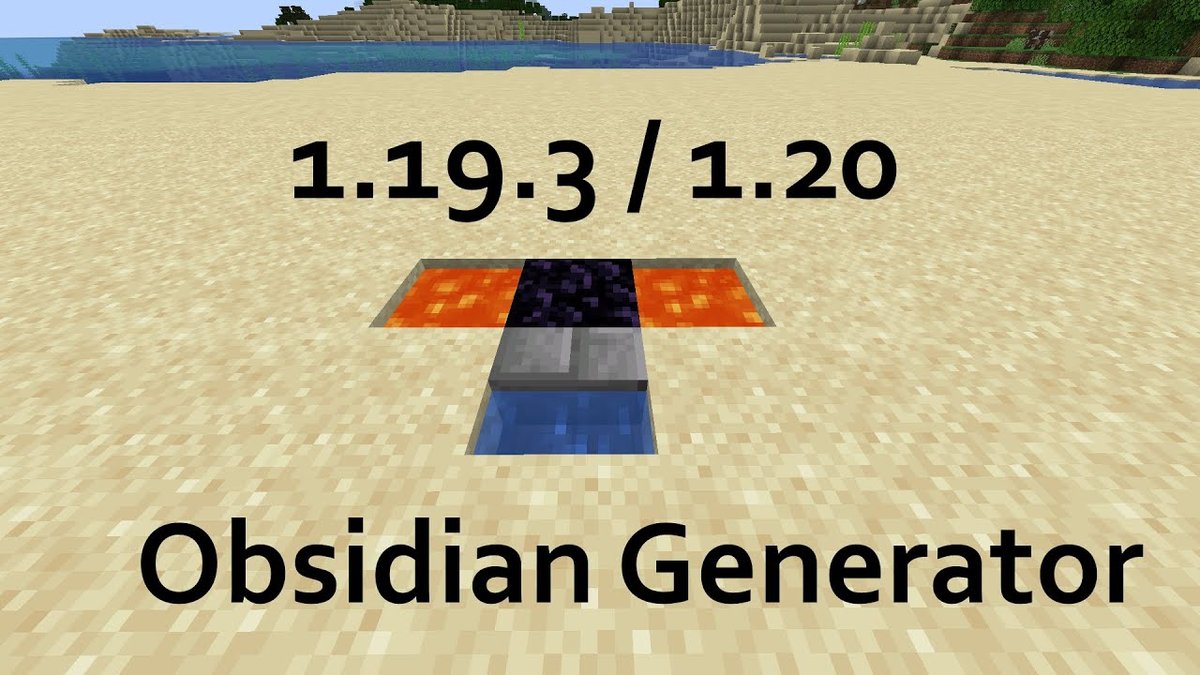
At its heart, an obsidian generator leverages a simple in-game mechanic: when a water source block flows over a lava source block, it creates obsidian. If water flows over flowing lava, it creates cobblestone. The trick to generating obsidian reliably is to ensure water interacts with a source block of lava.
Basic generators are straightforward: a block of lava, a block of water next to it, and a collection point. But true efficiency requires moving beyond this rudimentary setup to a system that minimizes manual intervention, maximizes output per unit of space, and ensures a continuous flow of resources. If you're looking to make your own obsidian generator from scratch, understanding this basic principle is your first step.
Pillar 1: Designing for Throughput – Optimizing Creation Speed
The fundamental goal of any generator is to produce as much obsidian as possible, as quickly as possible. This isn't just about throwing lava and water together; it's about engineering the interaction.
Manual vs. Automated Flow Dynamics
Manual Designs: Often involve a player pouring water over a lava source, mining the obsidian, and repeating. While simple, it's slow and resource-intensive on the player's time.
Automated (Redstone) Designs: These are where true efficiency begins.
- Piston-based systems: Pistons can push obsidian blocks away from the generation point, making space for new blocks and allowing for continuous creation. This is critical for preventing the flow from turning into cobblestone.
- Water dispenser activation: Dispensers filled with water buckets can be triggered by redstone, creating temporary water flows that interact with lava, then retracting the water. This allows for precise, controlled obsidian generation.
- Lava Dispenser systems: More advanced setups might even automate lava delivery using dispensers.
The key here is understanding redstone timing. A perfectly timed pulse can create obsidian, push it, and reset for the next cycle without a hitch. This aligns with the "Resource Smoothing" technique, ensuring a steady, uninterrupted flow of production.
Maximizing Water-Lava Interaction
The most efficient designs ensure that a single water source block can interact with multiple lava source blocks simultaneously, or in rapid succession.
- Single-layer patterns: Arranging lava blocks in a line or grid, with water flowing across them, can create a row of obsidian.
- Stacked designs: More advanced generators stack multiple layers of lava and water, using pistons to push entire layers of obsidian outwards. This significantly boosts output per footprint.
- Optimal Placement: Ensure water flows directly into the lava source block's space, not adjacent to it. Misplacement is the number one cause of unwanted cobblestone.
- Pitfall to Avoid: Creating too much flowing water or flowing lava. Only interaction between a source block of water and a source block of lava (or water flowing into a lava source block) creates obsidian. If flowing water meets flowing lava, you get cobblestone, which jams your generator and wastes resources.
Pillar 2: Resource Management – Fueling Your Generator
An obsidian generator is only as efficient as its supply lines. The most significant resource you'll manage is lava.
Lava Sourcing: Keeping the Flow Constant
- Infinite Lava Pools (Overworld): While rare, finding a natural lava lake and establishing a bucket route can be an initial strategy. However, this is tedious for large-scale operations.
- Nether Lava Seas: The Nether is practically infinite lava. Setting up a portal near a vast lava sea and creating a safe route for bucket collection is a viable, though dangerous, strategy for manual transport.
- Basalt Deltas (Nether): These biomes in the Nether naturally generate vast amounts of lava, often in smaller, easier-to-manage pools.
- Automated Infinite Lava Farms: For the truly ambitious, this is the holy grail. Dripstone blocks placed under lava source blocks will slowly drip lava into cauldrons below. A network of cauldrons can then be harvested automatically by a system of dispensers and hoppers to fill buckets. This represents a long-term, sustainable solution that aligns with "Cost Optimization" by eliminating manual trips and "Capability Optimization" by dedicating game mechanics to the task.
Water Supply: The Unsung Hero
Water is typically easier to manage. An "infinite water source" (a 2x2 or 1x3 pool of water where any block removed instantly refills) can provide an endless supply for your generator's needs. Ensure your water source is close to or directly integrated into your generator design.
Tool Durability & Replenishment: The Mining End
Obsidian requires a diamond pickaxe or better. To maintain efficiency, you need to manage your mining tools.
- Efficiency Enchantments: An Efficiency V diamond pickaxe with Haste II status effect (from a beacon) can mine obsidian almost instantly. This is crucial for maximizing extraction speed and preventing generator backup.
- Mending Enchantment: Mending, combined with an XP farm, means your pickaxe effectively has infinite durability. This is a prime example of "Resource Leveling"—you're smoothing out the demand for new tools by maintaining existing ones.
- Fortune Enchantment: While Fortune doesn't increase obsidian drops, it's invaluable for other mining tasks, so consider a separate Fortune pickaxe for other resources if you're not using it specifically for obsidian.
- Automated Tool Repair: Some highly advanced systems can detect low durability tools and automatically swap them out or even repair them using an XP farm and mending.
Redstone Components: Powering Automation
Efficient redstone circuit design is key to "Cost Optimization" for your generator. Minimize the number of repeaters, comparators, and redstone dust needed while ensuring functionality. Simpler circuits are less prone to lag and easier to troubleshoot. Mastering efficient redstone circuits will significantly improve your generator's performance.
- Common Question: How much lava do I really need for an obsidian generator? For basic automated generators, you typically only need 1-2 lava source blocks interacting with water. The challenge isn't the number of source blocks, but the continuous supply to those source blocks if they get used up, or ensuring a fresh lava block is always available for the water interaction. For truly massive generators, an automated infinite lava farm becomes essential.
Pillar 3: Collection & Storage – Handling the Output
Generating obsidian is only half the battle; collecting and storing it efficiently is the other. Without a robust collection system, your hard-won obsidian could despawn or simply overwhelm your inventory. This is where "Critical Path Method" applies—every step from generation to storage must be seamless.
Mining Techniques: Speeding Up Extraction
- Haste II Beacon: Position a beacon with a Haste II effect over your mining area. This significantly increases mining speed, allowing even manual mining to keep up with faster generators.
- Blast Mining (Advanced): For enormous, non-automated obsidian farms (e.g., when clearing large areas), TNT can be used, but this is incredibly resource-intensive and often destructive. Stick to pickaxes for most generator designs.
- Automatic Mining (Wither/TNT-based): Highly complex generators can use Wither cages or precise TNT explosions to break obsidian without player input, directing the drops into collection systems. This is an advanced "Capability Optimization" strategy, leveraging powerful entities.
Automated Collection Systems
- Hopper Lines: Hoppers placed beneath where obsidian generates will automatically pick up dropped items. Ensure they lead into a centralized storage system.
- Water Streams: Sometimes, water streams can be used to funnel obsidian drops into a single collection point, where hoppers can then take over.
- Minecart with Hopper: For very long collection lines or spread-out generators, a minecart with a hopper running on a powered rail system can be more efficient than many individual hoppers, as it can cover a larger area.
- Shulker Box Loaders: For truly massive output, design a system that automatically fills shulker boxes with obsidian, then ejects them into a separate storage array or ender chest system. This integrates well with optimizing your Minecraft farms in general.
Storage Solutions: Keeping It Organized
- Double Chest Networks: The most common solution. Organize chests by type or purpose.
- Tiered Storage Systems: Build a central drop-off point that sorts items into specific chests. For obsidian, this might mean a dedicated storage vault.
- Shulker Box Storage: Shulker boxes are portable chests. Filling them with obsidian and storing the filled boxes is the most compact way to transport and store vast quantities. An automated shulker box loader is a game-changer for large-scale production.
- Pitfall to Avoid: Forgetting about overflow. If your collection system can't keep up with your generation rate, items will despawn. Always design your storage with excess capacity, or incorporate smart overflow protection (like void chests for unwanted items, or shulker box loaders).
Pillar 4: Strategic Placement & Expansion
Where you build your obsidian generator can significantly impact its overall efficiency and your long-term success. This is "Location Optimization" in action.
Biome and Dimension Choice
- Overworld: Generally safer, easier to access water, but lava is less abundant. Good for smaller, localized generators.
- Nether: Abundant lava, crucial for dripstone farms. However, it's a dangerous environment with unique challenges (fire, ghasts, no water source blocks). Building a generator in the Nether is excellent for large-scale lava harvesting.
Proximity to Resources
- Lava Sources: If you're not using an infinite lava farm, building near a large lava lake (in the Overworld or Nether) reduces travel time for manual bucket collection.
- Building Materials: Keep essential building blocks, redstone components, and tools close by for construction and maintenance.
- Your Base: Building near your main base allows for easy access to storage, enchanting, and repairs.
Safety and Security
- Mob-Proofing: Ensure your generator area is well-lit and secured against hostile mobs that could interfere with operation or damage components.
- Blast Resistance: Obsidian itself is blast-resistant, but surrounding structures and redstone circuits should also be protected, especially if creepers or ghasts are a concern.
- Player Security: On multiplayer servers, consider protecting your generator with claims or hidden designs.
Modular Design for Future Expansion
Think big from the start. "Modeling and Simulation" in creative mode before committing to a survival build is highly recommended.
- Scalability: Design your generator in modular units that can be easily replicated side-by-side or stacked vertically. This allows you to start small and expand as your obsidian needs grow without tearing down your entire setup.
- Infrastructure: Plan for robust collection and storage systems that can handle increased output. It's often easier to build a slightly oversized collection system initially than to completely overhaul a small one later. Considering advanced Minecraft automation from the outset will save you time later.
Pillar 5: Monitoring & Maintenance – Keeping the Flow
Even the most perfectly designed obsidian generator needs occasional oversight. "Tracking and Optimizing Utilization Levels in Real-time" and addressing "Dynamic Factors" are critical for sustained efficiency.
Checking Output Rates
- Visual Inspection: Periodically observe your generator. Is obsidian forming consistently? Are pistons firing? Are items flowing into hoppers?
- Storage Levels: Monitor your obsidian storage. If it's not filling up as expected, or if there's a sudden drop in collection, something might be wrong.
Resource Level Checks
- Lava Supply: If using a non-infinite lava source, ensure your buckets are replenished, or your dripstone farm is operating as expected.
- Tool Durability: Keep an eye on the durability of pickaxes used for mining. Replace or repair them before they break.
Wear and Tear
- Redstone Components: While durable, redstone can sometimes glitch or get broken by accidental clicks. Ensure all repeaters, comparators, and redstone dust are intact.
- Block Damage: Accidental mining or mob damage can break crucial blocks, disrupting flow or circuits.
Troubleshooting Common Issues
- No Obsidian Generation:
- Lava source missing/depleted: Replenish or check the lava supply.
- Water flow incorrect: Ensure water is flowing into a lava source block, not adjacent to flowing lava.
- Piston jam: Obsidian might not be getting pushed away, blocking further generation. Clear the area.
- Cobblestone Generation:
- Incorrect water/lava interaction: This almost always means flowing water is hitting flowing lava. Adjust your water/lava source block placement or timing.
- Items Not Collecting:
- Full hoppers/chests: Expand your storage or clear out items.
- Blocked hoppers: Ensure hoppers aren't pointing into solid blocks or other non-storage blocks.
- Broken minecart tracks: Check for missing or unpowered rails.
Beyond the Basics: Advanced Optimization Techniques
Once you've mastered the fundamentals, there's always room to push the boundaries of your obsidian production. This is where "Combining Resource Optimization Techniques" truly shines, bringing together multiple concepts for synergistic effects.
Hyper-Efficient Generator Designs
- Multi-layer Piston Generators: Designs that use multiple layers of pistons to push obsidian upwards or outwards, generating dozens of blocks simultaneously.
- Wither-Based Generators: These incredibly complex designs exploit the Wither's ability to destroy blocks (excluding bedrock, command blocks, and some others) to break obsidian, which is then collected. They require careful containment of the Wither.
- TNT Duping with Obsidian: While often considered an exploit, some advanced players use TNT duping (creating infinite TNT) to blast large quantities of obsidian. This is highly technical and server-dependent.
Integration with Other Farms
- XP Farm Integration: Connect your obsidian collection system to an XP farm to automatically mend your pickaxes and gain valuable levels.
- Sorting Systems: Integrate your obsidian storage with a larger, universal item sorting system for your entire base.
- Ender Chest Networks: For transport and centralized storage, use Ender chests to move obsidian from the generator directly to remote storage locations. This is essential for mastering advanced Redstone techniques and automation.
Server-Side Considerations
- Chunk Loading: Ensure your generator is in a loaded chunk or use chunk loaders (if allowed on your server) to keep it running even when you're far away.
- Lag Reduction: Complex generators, especially those with many redstone components, can cause lag. Design with lag in mind: minimize fast clocks, use efficient redstone, and avoid excessive entity counts.
Common Misconceptions & Clarifications
- "More lava means more obsidian faster." Not necessarily. The rate-limiting step is usually how quickly water interacts with lava source blocks and how quickly the resulting obsidian is mined/removed. Having more lava source blocks available is good, but simply a massive pool of flowing lava doesn't inherently speed up generation if the water interaction isn't optimized.
- "Any pickaxe is fine for obsidian." While technically true for breaking it, using anything less than a diamond pickaxe with Efficiency V will make your mining incredibly slow, creating bottlenecks in your entire generation process. Durability management with Mending is also critical.
- "You only need a simple generator." A simple 1x1 generator is fine for a few blocks of obsidian, but if you're building a Wither arena, a full beacon pyramid, or a massive obsidian base, you'll quickly outgrow its output. Planning for scalability and automated collection is vital for serious projects.
Your Next Steps to Obsidian Generation Mastery
You've learned the principles, the designs, and the pitfalls. Now, it's time to act.
- Assess Your Needs: How much obsidian do you realistically need? This will dictate the scale of your generator.
- Start Simple (Then Expand): If you're new to generators, build a small, piston-based automated design in a safe location. Master the flow and collection.
- Prioritize Lava Sourcing: Decide on your lava strategy. For long-term goals, start building that dripstone infinite lava farm early.
- Embrace Redstone: Don't be intimidated. Experiment in a creative world to refine your designs for pistons, dispensers, and collection systems.
- Monitor and Refine: Once built, spend time observing your generator. Where are the bottlenecks? What's getting stuck? A minor tweak can often lead to significant efficiency gains.
- Upgrade Your Tools: Invest in a Mending, Efficiency V diamond pickaxe. It's the most impactful single upgrade for your mining speed.
By applying these principles of resource optimization, you'll transform your obsidian acquisition from a tiresome chore into an automated powerhouse. Imagine the possibilities when endless obsidian is at your fingertips – your Minecraft world is waiting for your grandest designs.