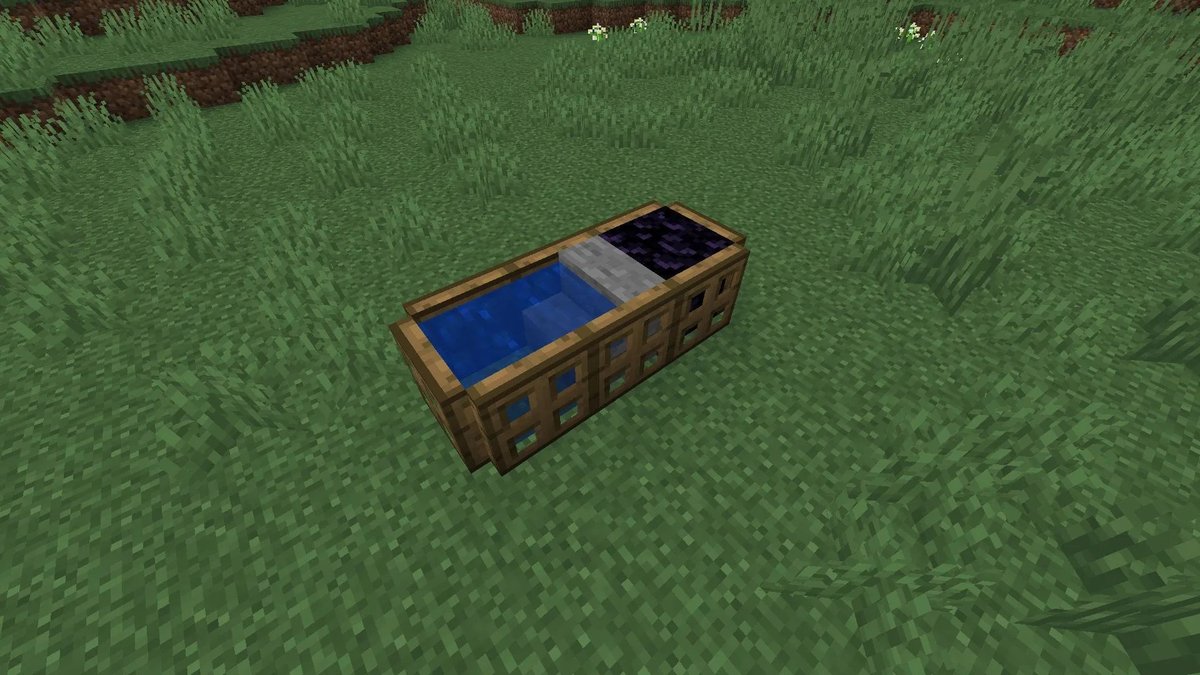
In the expansive, blocky worlds of Minecraft, few resources are as critically important yet challenging to acquire in bulk as obsidian. This dark, blast-resistant block is the bedrock (pun intended!) for crucial late-game structures: from the enigmatic Nether Portals that whisk you to dangerous dimensions, to the potent Beacons that grant powerful status effects, and the essential Enchanting Tables that elevate your gear. While obsidian naturally dots the landscape in the Nether, the End, and the occasional Overworld ravine, relying on natural generation is often inefficient and time-consuming. This is where Obsidian Generators Across Minecraft Editions (Java vs. Bedrock) become not just a convenience, but a strategic necessity.
Whether you're a seasoned builder in Java or a mobile adventurer in Bedrock, understanding how to reliably produce obsidian on demand can dramatically accelerate your progress and open up new possibilities for your builds. Let’s dive into the core mechanics and various clever constructions that let you farm this precious material with ease.
At a Glance: Key Takeaways for Obsidian Generation
- Core Principle: Obsidian forms when a lava source block is touched by flowing water.
- Universal Mechanics: The fundamental process of lava meeting water to create obsidian is consistent across both Java and Bedrock editions of Minecraft.
- Mining Requirement: Always use a Diamond Pickaxe or Netherite Pickaxe to mine obsidian; anything less won't yield the block.
- Generator Types: From simple one-time setups to automated, renewable farms, there's a method for every scale of need.
- Gamerule Power: For creative or command-enabled worlds, a simple
/gamerulecommand can make obsidian generation incredibly fast. - Dripstone Innovation: The pointed dripstone offers a clever, if slow, way to passively farm lava for obsidian.
The Elemental Foundation: How Obsidian is Born
At its heart, obsidian generation is a beautifully simple dance between two elements: lava and water. When a source block of lava comes into contact with flowing water, that lava block instantly transforms into obsidian. This is a crucial distinction: flowing lava interacting with flowing water, or flowing lava interacting with a water source block, typically results in cobblestone or stone. The magic happens when flowing water meets a lava source block.
To put it simply: if you want 'X' obsidian blocks, you'll need 'X' source blocks of lava and at least one block of water. This core principle holds true regardless of whether you’re playing Minecraft Java Edition on your PC or Bedrock Edition on a console or mobile device. While redstone mechanics and certain block interactions can differ between editions, the basic lava-water interaction for obsidian is fundamentally the same.
Method 1: The Simple Lava Lake Conversion
This is often the first, most straightforward way players generate obsidian when they need a few blocks quickly, perhaps for a starter Nether Portal. It leverages existing world features and requires minimal setup.
What You'll Need:
- One bucket of water (or more, if you want to speed things up).
- A pickaxe capable of mining stone.
The Process:
- Locate a Lava Lake: Scout out an area with a visible lava lake. These are common in caves, ravines, and sometimes even on the surface, especially in specific biomes.
- Find a High Point: Identify a block above the lava lake that you can access. This is where your water source will go. The goal is to allow the water to flow over the lava.
- Place Your Water: Carefully pour a single bucket of water onto that higher block. Watch as the water cascades down, spreading across the surface of the lava lake.
- Observe the Transformation: Every lava source block that the flowing water touches will convert into obsidian. You'll see the dark blocks appear almost instantly.
- Mine Your Haul: Once the water settles (or flows away), you can safely mine your newly formed obsidian. Remember to bring a diamond or netherite pickaxe!
- Repeat (Optional): If you need more obsidian, you can either scoop up the water with your bucket and place it elsewhere over the lake, or collect lava in buckets from untouched parts of the lake and bring it to your water.
This method is fantastic for an immediate obsidian need, but it's not renewable in the sense of generating lava, meaning you'll either need to find new lava lakes or constantly transport lava.
Method 2: The Reusable Multi-Block Obsidian Generator
Moving beyond spontaneous lake conversions, a multi-block generator offers a structured, repeatable way to produce multiple obsidian blocks in one go. It requires a bit more construction but is significantly more efficient than the lava lake method for moderate needs.
What You'll Need:
- At least 1 bucket of water (you can place multiple for more simultaneous obsidian).
- Approximately 50 non-flammable, blast-resistant blocks (like cobblestone, stone, or even obsidian itself for resilience).
- A relatively flat piece of land.
Building Your Generator:
- Construct the Water Holder: Start by building a simple basin for your water. A 1xN channel (where N is how many obsidian blocks you want to generate in a row) with walls one block high is sufficient. Place your water source(s) within this channel.
- Create the Lava Holder: Immediately next to your water holder, separated by a single row of your fireproof blocks, build the lava holder. This section needs to be one block lower than the water holder's base and at least two blocks deep.
- Form the 'Step': Between the water and lava sections, create a 'step'. This means the separating row of blocks should be one block lower on the lava side, allowing water to flow down into the lava pit.
- Place Your Lava: Fill the lava holder with individual lava source blocks. For example, if you've made a 2x3 block space in your lava holder, place one bucket of lava into each of those six block spaces. The more lava sources, the more obsidian you'll get per activation.
- Activate Your Generator: To convert the lava, destroy one of the blocks separating the water holder from the step. The water will flow over the step and into your lava holder, instantly converting all the lava source blocks it touches into obsidian.
- Mine and Reset: Collect your obsidian. To use the generator again, scoop up the water, replace the lava source blocks (if you don't have an infinite lava source nearby), and rebuild the separating block.
This design is a workhorse for mid-tier obsidian needs, providing control over placement and quantity. If you're looking for more general building tips for complex structures, you might find our guide on how to build an obsidian generator incredibly helpful for detailed step-by-step instructions and visual aids.
Method 3: The Renewable Obsidian Generator (With Gamerule)
For those operating in a world where commands are accessible (e.g., creative mode, admin on a server, single-player with cheats enabled), this method is hands-down the fastest and most effortless way to generate renewable obsidian. It leverages a specific game rule that drastically changes lava's behavior.
The Magic Command:
The key to this method is the command: /gamerule LavaSourceConversion true.
What this command does is enable lava source blocks to convert into new lava source blocks when they are adjacent to other lava source blocks and an empty space. This essentially creates an 'infinite lava' effect when set up correctly.
What You'll Need:
- A staircase (any block type).
- Two lava source blocks (two buckets of lava).
- One water source block (one bucket of water).
- Access to game commands.
Building and Activating:
- Set the Gamerule: Open your chat and type
/gamerule LavaSourceConversion true. Press Enter. You'll get a confirmation message. - Create the Setup:
- Place a block.
- Place a staircase block on top of and immediately adjacent to the first block, facing away from where you'll place the water.
- Place your first lava source block directly behind the staircase block.
- Place your second lava source block next to the first lava block, so they are side-by-side.
- Now, place your water source block in front of the staircase, allowing the water to flow into the space created by the stairs.
- Watch the Flow: The flowing water will interact with the "infinite" lava source being generated by the gamerule, continuously creating obsidian in the spot where they meet.
- Mine Endlessly: You can now mine obsidian from this spot as quickly as your pickaxe allows, and a new obsidian block will almost immediately replace it.
Important Note: This method relies on a game rule that fundamentally changes lava's behavior. It's generally not used in survival worlds where commands are disabled, as it trivializes resource gathering. However, for builders who need vast quantities of obsidian in creative projects, it's an absolute game-changer.
Method 4: Renewable Lava Farm (Without Gamerule Tweaks)
What if you're in a survival world and need a constant supply of lava to feed your obsidian generators, but don't want to constantly collect it from the Nether? The pointed dripstone offers a slower but fully renewable solution: a lava farm. This farm generates lava, which you can then collect and use with flowing water (like in Method 2) to create obsidian.
What You'll Need:
- One Cauldron.
- One Pointed dripstone block.
- One Lava source block.
- Some building blocks (e.g., cobblestone) to construct the structure.
Building Your Lava Farm:
- Platform for Lava: Build a small platform. This can be as simple as a 3x3 area.
- Place the Lava Source: In the center of your platform, place your single lava source block.
- Place the Dripstone: Directly beneath the lava source block, attach a pointed dripstone block to the underside of the platform. Ensure the pointed end is facing downwards.
- Place the Cauldron: Directly beneath the pointed dripstone (and allowing for a block or two of air), place your cauldron.
- Observe the Drip: Over time, the lava from the source block above will slowly drip through the pointed dripstone and into the cauldron below, gradually filling it.
- Collect and Repeat: Once the cauldron is full (it takes a fair amount of time, roughly one bucket every 7 Minecraft days, but can be sped up with multiple dripstones), you can right-click it with an empty bucket to collect a lava source block. You can then use this lava in a Multi-Block Obsidian Generator (Method 2) to create obsidian.
Scaling for Demand:
This method is inherently slow. If you have a high demand for obsidian (e.g., building multiple beacons or an elaborate Nether hub), you'll need to build this farm at a much larger scale. Imagine rows upon rows of lava sources over dripstones, each dripping into its own cauldron. This requires a significant initial investment in lava and dripstone, but it provides a truly infinite, albeit slow, lava supply. Building a large-scale lava farm can be a complex but rewarding endeavor, much like designing efficient advanced mining techniques for other valuable resources.
Mining Your Precious Obsidian
Regardless of how you generate it, one rule remains absolute: to collect obsidian as a block, you must use either a Diamond Pickaxe or a Netherite Pickaxe. Any other tool, or even your bare hand, will simply destroy the block without dropping it, wasting all your effort.
The mining speed of obsidian is also notably slow. A diamond pickaxe takes about 9.4 seconds to mine a single block, while a Netherite pickaxe reduces this slightly to 8.25 seconds. Enchantments like Efficiency can significantly speed this up, making it almost instantaneous at Efficiency V. This slow mining speed is why efficient generation methods are so vital—you want to spend less time finding lava and more time mining the actual obsidian.
Common Questions and Troubleshooting
Even with the best guides, sometimes things don't go as planned. Here are answers to common questions and issues players face with obsidian generators.
"My Water is Turning Lava into Cobblestone, Not Obsidian!"
This is the most frequent issue. Remember the core principle: flowing water must contact a lava source block. If you have flowing lava meeting a water source block, or flowing lava meeting flowing water, you'll almost always get cobblestone or stone. Ensure your setup allows the water to flow over and into actual lava source blocks. Often, this means creating a small 'pond' of lava sources first, then releasing water onto it.
"Do I Need an Infinite Lava Source for My Generators?"
Not necessarily for the Multi-Block Generator (Method 2). You can transport lava buckets from natural sources or your Dripstone Lava Farm. However, the Renewable Generator (Method 3) creates an infinite lava source via the gamerule, making it self-sufficient. For long-term survival, the Dripstone Lava Farm is your renewable lava source, which you then manually transport to your obsidian generator.
"Why Isn't My Dripstone Farm Filling the Cauldron?"
Several factors can affect dripstone farm efficiency:
- Source Block: Ensure there's a lava source block directly above the dripstone, not just flowing lava.
- Cauldron Placement: The cauldron must be directly beneath the pointed dripstone, with no blocks in between.
- Random Tick Speed: Lava dripping is based on random ticks. While predictable over large numbers, individual dripstones can seem slow. Building more dripstone-cauldron setups increases your overall yield.
- Chunk Loading: The chunks containing your lava farm need to be loaded for it to produce lava. If you're far away, it won't work.
"Can I Automate Obsidian Mining?"
In Java Edition, yes, to a limited extent. You can use Withers to break obsidian, and hoppers to collect it. However, setting up a Wither-based farm is incredibly dangerous and complex, typically reserved for advanced players. Most players stick to manual mining with highly enchanted pickaxes. The challenges of automated resource collection in Minecraft are numerous, and understanding mechanics like how to prevent Creeper griefing is often a prerequisite for such advanced builds.
"Are There Any Differences Between Java and Bedrock for These Generators?"
For the fundamental lava-meets-water mechanics, no. The methods described work across both Java and Bedrock Editions. Any minor differences would typically involve:
- Redstone: While the specific generators here are fairly simple, more complex automated obsidian farms using redstone might have slightly different timings or block physics between editions.
- Block Updates: Some very niche exploits or specific block update behaviors could vary, but for the basic methods outlined, you won't encounter significant differences.
- Gamerule Availability: The
/gamerule LavaSourceConversion truecommand is available in both editions.
So, rest assured, the core principles of crafting Nether Portals and other essential obsidian builds remain universal.
Beyond the Basics: Strategic Uses for Obsidian
Once you've mastered obsidian generation, you unlock a wealth of strategic options in Minecraft:
- Nether Portals: The most obvious use. Efficient obsidian generation means you can create portals in multiple locations, connecting your overworld bases to various points in the Nether for faster travel.
- Beacons: A beacon requires a Nether Star (a drop from the Wither) and five blocks of obsidian. Building a full beacon pyramid requires a substantial amount of precious blocks and can benefit immensely from a consistent obsidian supply. Understanding beacon recipes is key to leveraging this powerful block.
- Enchanting Tables: An essential for any player seeking powerful gear, an enchanting table needs four blocks of obsidian, two diamonds, and a book.
- End Portals (Frame Repair): While you can't create an End Portal, if you're building in the End, obsidian is vital for defense against the Ender Dragon or general blast resistance.
- Blast Protection: Obsidian's extremely high blast resistance makes it an excellent building material for protecting your valuable structures from Creeper explosions, Wither attacks, or even TNT.
- Wither Cages: For advanced players, obsidian is the go-to material for constructing cages to trap and fight the Wither boss safely.
Your Next Steps to Obsidian Mastery
Now that you understand the mechanics and various generator types, your next step is to choose the method that best suits your current needs and playstyle.
- For quick, ad-hoc needs: Stick with the Simple Lava Lake method.
- For moderate, repeatable needs in survival: Build a Reusable Multi-Block Generator.
- For infinite, fast obsidian in command-enabled worlds: Leverage the
/gamerule LavaSourceConversion truetrick. - For true survival sustainability: Invest in a Dripstone Lava Farm to fuel your multi-block generators.
No matter which path you choose, having a reliable source of obsidian will transform your Minecraft experience, enabling grander constructions, safer adventures, and ultimately, a more powerful presence in your world. Go forth, and mine smarter, not harder!
Untuk pemahaman lebih lengkap, baca panduan utama kami: how to build an obsidian generator